2025 in Reading


An Fear Marbh (Inis Tuaisceart), Co. Kerry, (Jack Sheehan, January 2025)
In late December 2016, I posted a video on Facebook (Facebook!) of a live performance of “Heavenly Father” by Bon Iver at Sydney Opera House with the caption that I hoped it would be a better year. It hasn’t been, but I continue to hope.
My reading habits, built up over a lifetime, were temporarily shattered by the final years of the PhD, when reading for pleasure virtually stopped in favour of downloading JSTOR articles and despairing. Since then I have been far less of an intentional reader, moving instead like a mouse from cheese to cheese, nibbling at whatever is in front of me. If you give me a book I am extremely likely to read it that week. I am extremely unlikely to read it at any other time. Nonetheless this year some intentionality began to creep back into my reading list.
My year began with exactly that, two Christmas presents, from my sister and my mother, Olivia Laing’s Funny Weather: Art in an Emergency (2020), and Katya Hoyer’s Beyond the Wall: East Germany 1949-1990 (2023). I enjoyed the Laing book far more, but remember almost nothing of it now. Hoyer’s book was written with a few supremely irritating stylistic tics, but had enough in it to be worth persevering. Apparently the German historians loathed it, presumably because it didn’t conform to the usual presentation of East Germany as a uniformly grey place.
The first two weeks of February were given over entirely to the 867 magnificent pages of James McPherson’s Battle Cry of Freedom: The Civil War Era (1988). I had used sections of McPherson in the past, fairly instrumentally, but as I was designing a research project for my 7th grade students, I figured I should read it cover to cover. There are few better single volume histories of anything in the English language. McPherson’s main asset is positioning: he has that great historian’s talent of seeming to be in the exact place where the war is brewing, breaking out, escalating, turning, turning back, in the balance or in its dying moments. He incorporates palatable amounts of military, social, political, economic and environmental history, without ever taking you fully away from the enormous and vivid cast of characters who fought it. All those bickering, backbiting, hysterical, sometimes drunk, sometimes insane, occasionally heroic men and women who fought the unassailable slave power to the finish. This is a book to put fire back in you after a defeat.
Typically I follow up a long book with a short one, but I was so full of the holy spirit after McPherson that I went straight into Thomas Pynchon’s Mason & Dixon (1997), a book I started in 2012, getting a hundred pages in, before misplacing the tome. With Shadow Ticket (later), I have now read exactly half the books Pynchon has published, and Mason & Dixon is comfortably the best, besides being one of the best books ever written. I promise I’ll be more diffident for the rest of the year, but reading this book felt like finding a new window in your home hidden behind a painting. Pynchon has spent his career tracing the terrible structures of power that possess our world today, and this, being the earliest, is the starkest, the saddest, and the funniest. It’s a diagnostic of world imperialism that is also a story about two men who are deeply, hopelessly in love. Contains many conspiratorial Jesuits.
I stayed in the colonial Americas in March, with Álvaro Enrigue’s You Dreamed of Empires (Tu sueño imperios han sido, 2022, trans. Natasha Wimmer, 2024). I admired rather than enjoyed this one; a bloody, chilly, mystical drug dream taking place over a few days in 1519 as the Spanish and Aztec Empires came into sudden, violent contact. It has one of the most genuinely revolting opening scenes in literature, and made me feel like I understand Mexico about 2% better.
April brought Jenny Erpenbeck’s Go, Went, Gone (Gehen, ging, gegangen, 2015, trans. Susan Bernofsky, 2017) into my life, via dear friend and brilliant journalist Sarah Goodman. I know Kairos has gotten a lot of love this year, deservedly so, but her earlier novel is worth returning to. It’s a story of an older East German man arresting his own slide into irrelevance and ennui through the building of slow, practical solidarity with people seeking asylum. The book starts gentle, wistful, melancholy and gradually builds to a kind of righteous, joyous fury that I often find lacking in defenses of migration and asylum. This is not a fairy tale, but there is some small hope of better in terrible times. I have nothing smart to say about my other April book, Jen Beagin’s Big Swiss (2023), other than it was relentlessly gross and two tons of fun.
Early summer brought a series of minor disappointments. First, W.G. Sebald’s Austerlitz (2001, trans. Anthea Bell), a canonical book of the literary world just before my own. I read and adored The Rings of Saturn a decade ago, but found Austerlitz too cold, too austere, too weighted by the expectation of genius I had placed upon it. I may simply be the wrong audience.
Next, Kaliane Bradley’s The Ministry of Time (2024), which came highly recommended, and let me down quickly. It’s an ambitious piece of work with a great setup, but the prose smothers under a very English whimsy, and few of the broad jokes are funny enough to justify their inclusion in what is a generally serious book. On the subject of recommendations, maybe no writer has ever come with more than Flannery O’Connor. On my eventual reading this summer, Everything that Rises Must Converge (1965) was hugely overrated and her worldview deeply repellent. I have a similar distaste for Didion; I don’t tend to like writers who find humanity contemptible. Ultimately, I found Everything that Rises smug, a cardinal sin.
Tony Tulathimutte’s collection Rejection (2024) was decidedly not for me, but ambitious and path-breaking in meaningful, admirable ways. The strongest story is “Pics”, an obsession narrative which contains some disquieting images that still bubble up in my brain occasionally. The book’s final and longest section fizzled, and ended in a frustrating, self-defense crouch. Jess Bergman’s thoughts on the book are far more coherent than my own.
I read two political memoirs in quick succession in July, Amber A’Lee Frost’s Dirtbag (2023), and Ta-Nehisi Coates’ The Message (2024). Coates’ book is the more successful of the two; more vulnerable, more honest about his own failings and less resigned and disengaged from the moment.
I was lucky enough to read advance galleys of a few exceptional books that my wife Rachel Sargent acquired as an editor at Ecco. Mariah Rigg’s Extinction Capital of the World (July 2025) is a collection of lightly linked short stories set in and around Hawaii, and is so moving, funny and convincing that I’m still astonished it’s a debut. I read all of Claire Oshetsky’s comic noir Evil Genius (Feb 2026) on a single flight, and by the end of it my eyes were poking out like a Looney Tunes character. It is so fucking funny, and dark as jet. I felt immensely privileged to read Ana Kinsella’s Freida Slattery as Herself (May 2026) before the general public. It’s an absorbing, hilarious, sometimes brutal decade-long saga, with one of the most convincing depictions of Dublin I’ve ever read. The big social novel is coming back, and by my hazy oracle abilities this one is going to be huge.
I finally finished Marilynne Robinson’s Gilead series with Jack (2020). I love everything she writes, despite (because of?) the odd Congregationalist Christianity that floods her work. My review from August reads, in its entirety: “Thank God for love, or we wouldn’t have anything in this old world.” That’ll do!
I started a new teaching job in September, and as the insane two months of the start of term went on I read whatever was handy. Anthony Bourdain’s Kitchen Confidential (2000), (earthy, charming, wistful), John Ganz’ When the Clock Broke: Con Men, Conspiracists, and How America Cracked Up in the Early 1990s (2024), (Irritatingly good), James Woods’ How Fiction Works (2008), (slight), Mary Oliver’s Upstream (2016), (disappointing), and Cora Lewis’ Information Age (2025), (unassuming, has lingered in the mind).
Caroline O’Donoghue’s The Rachel Incident (2023) was a very pleasant surprise, as was Elizabeth McCracken’s A Long Game: Notes on Writing Fiction (2025). Pynchon’s Shadow Ticket (2025) was underwhelming, but the man is 88 years old, and I’m just happy he had one more in him. Osita Nwanevu’s The Right of the People: Democracy and the Case for a New American Founding (2025) was tight, lucid, measured, and would make an excellent gift for a liberal you were trying to push leftward.
I’ve spent much of the last three years teaching Medieval history, and stumbled on Hildegard of Bingen’s (1098 – 1179) Selected Writings (2001, trans. Mark Atherton) in our neighborhood free sharing box. Von Bingen was a twelfth century abbess and mystic, and this is a surprisingly accessible collection from across her career, including some letters written by and to her, and a hagiographic mini biography from shortly after her death. One of the most useful things you can do for yourself as a writer is to periodically seek out texts from very different time periods and epistemologies. Months later, I’m still buzzing off of Hildegard and her world. I felt so vindicated by Rosalía’s new album Lux, which shared my fascination with the woman.
I finished the year with two Irish books, Caoilinn Hughes’s The Wild Laughter (2020) and Ferdia Lennon’s Glorious Exploits (2024). I’ve been a little disenchanted with Irish literature in the last few years, which receives almost universal praise abroad and insufficient sustained criticism. These two books, read together, have me back on side. Both are novels about aftermaths, about performances of self, and about unsparing, occasionally stomach lurching violence. The Wild Laughter is also the single best novel about the Irish economic crash that I have read to date.
Christmas is for comfort, so I’m speeding through old Terry Pratchett novels like Going Postal (2004) and Monstrous Regiment (2003), which are my equivalent of eating your grandparent’s home cooking.
I didn’t publish much this year: a few essays, a few opinion pieces. 2025 felt spiritually and intellectually exhausting, simultaneously full of horror and empty of inspiration. The avenues to publishing fiction, especially, felt more obscure and tangled than ever. Practically speaking, I also spent a huge proportion of my time teaching history to wonderful but tiring cohorts of middle schoolers, leaving little enough time for the kind of deep reading and contemplation that makes for decent writing. I know in my heart that 2026 is unlikely to be any better of a year politically, but there are nonetheless things to be excited for. We have to imagine that the seeds we drop now will flower at some point when the weather improves. I should probably avoid plant metaphors; I’ve never been much of a gardener.
Here’s to a better 2026.
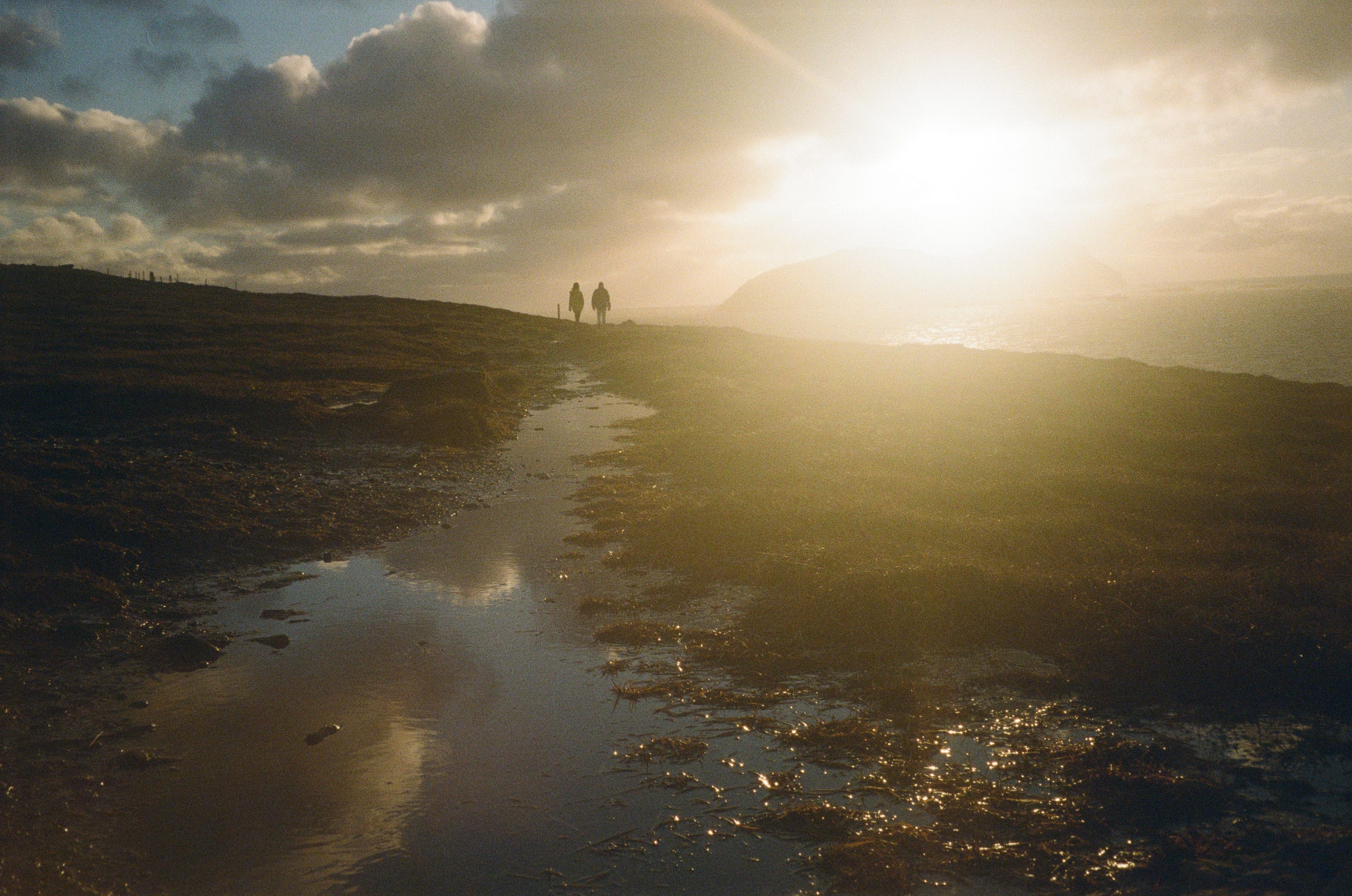
(Jack Sheehan, 2025)
Very much enjoyed reading these pithy and incisive verdicts! And I agree completely re: Ministry of Time.
I do believe I enjoyed Flannery O'Connor when I read her many years ago, and Rejection was a highlight for me early this year. But having been left very morose by repellent world views in novels I've read more recently, perhaps we are all craving a bit more hope at this time.